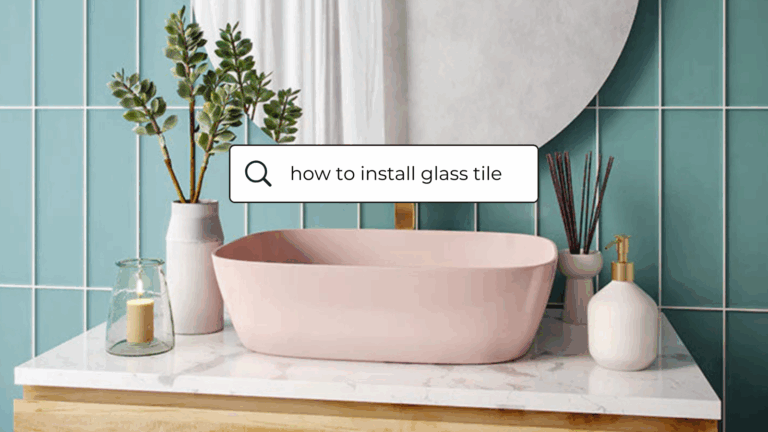
Picture a potential client curled up on the couch tonight with ChatGPT open on their phone. They aren’t typing “interior designer near me.” They’re typing something like: “We’re renovating a 1920s bungalow. I want it warm and a little moody without feeling dark, and I need a designer who’s great with small kitchens and won’t make me replace every piece of furniture we own.” Now pull up your website and find the page that answers that. Not the page that shows it. The page that says it.
If you came up empty, trust me, you’re in very good company. I’ve had some version of this conversation with so many designers and home brands, and most just haven’t written that page. The more I look at it, the more convinced I am that our industry doesn’t really have an AI problem. We have a words problem.
A Beautiful Industry That AI Can Barely Read
In August, Adobe put an actual number on something I’ve been talking about for a while: their AI Traffic Trends Report measured AI citation readability, which is basically how much of a web page an AI system can actually understand and cite. Furniture & Home scored 64% overall. Apparel scored 76%, and Electronics came in at 70%.
Product detail pages were even rougher. Furniture & Home dropped to 57%, while Sporting Goods led at 70%, mostly because those pages are loaded with structured specs. Adobe’s diagnosis for our category was refreshingly blunt: we lean on imagery instead of descriptive content.
In plain English, a big chunk of what’s on a typical furniture or home product page is going right over the heads of the tools our buyers now research with. That one stings, because the photography is usually the part we’re proudest of.
The Audience Has Already Moved
If this were some niche behavior, I’d happily file it under “nice to fix someday.” It’s not. Google reports that AI Overviews has more than 2.5 billion monthly active users and AI Mode has passed 1 billion. The ChatGPT app crossed 1 billion monthly active users this year, too.
The way people search has changed as well. AI Mode queries run about three times longer than traditional searches. People still type quick keyword searches, but more and more they’re asking full questions with real constraints baked in, just like our bungalow owner example up there.
Please don’t read this as me saying your Google rankings don’t matter. They absolutely do, so no torching your SEO strategy. There’s just a new layer sitting between your brand and your future client now, and it can shape the first round of research and which brands come up in it. If your story isn’t written down somewhere, there’s a good chance that layer won’t know it.
AI Is Already in the Room
And it isn’t only our clients. Houzz’s 2026 State of AI in Construction and Design research found that nearly 2 in 5 design firms (39%) are already using AI for everyday business tasks, and another 31% are actively exploring it. Firms using it report saving an average of 3.6 hours a week, and 24% say they’re saving more than five. I’m already mentally spending those five hours.
Homeowners are right there with us. Roughly one in five renovating homeowners told Houzz they used AI during a project.
So I’m not asking anyone to get ahead of some far-off trend. Your peers and your clients are already here. What matters now is whether AI has anything accurate to say about you when they ask.
AI Can See the Room. It Doesn’t Know the Story.
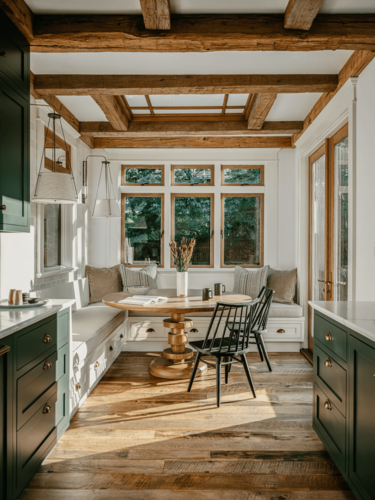
I want to be really clear about something: the gorgeous, feeling-forward brand decks and websites our industry has built were absolutely the right call. I would never tell a designer to stop investing in great photography. People respond to imagery almost instantly, and one great kitchen photo can tell a human buyer about your taste and your price point before they read a single word.
AI can look at that photo, too. It just can’t reliably know the story behind it. It can’t tell that the homeowners kept their grandmother’s dining table, that the kitchen was redesigned around accessibility or why you fell in love with that particular stone. It won’t know that your firm specializes in preserving historic millwork, or what problem the project actually solved.
Those details live in the words around the image, like your captions, project descriptions and page copy. The photos can help close the sale. The words give AI the context it needs to get you into the conversation in the first place.
The way I explain it to clients: your brand deck proves you’re recognizable, and your website copy has to prove you’re describable. Most of us have nailed the first one. The second one could use some love.
Every Word Is Doing Narrative Work (Whether You Meant It to or Not)
Words carry more than information. They carry connotations, and AI takes connotations very literally. If you don’t give it enough context, it will connect the dots with whatever information it has. And sometimes it gets that story wrong.
We saw this firsthand with one of our building-materials clients. Every time we asked AI tools to describe the brand, they called it expensive. Not one review, article or customer we could find ever said that.
We can’t know exactly why the model landed there. What we could see was what it had to work with: the word “premier” showed up all over the site, and there was very little language around it explaining the price point or who the product was really for.
“Premier” was telling AI something, whether anyone meant it to or not. The more specific context you put around words like that, the less room there is for the wrong impression to take hold.
What AI Search Visibility Asks of You
Here’s the good news: none of this requires a new website or becoming an AI expert. It asks for the same care you already give your photography, just pointed at your words. And step one isn’t changing anything. It’s looking.
Start by asking ChatGPT, Gemini and Google AI Mode what your firm is known for. Ask what kinds of projects you do, what your style is and who you’re best suited for. Then hold those answers up against what you want a potential client to understand.
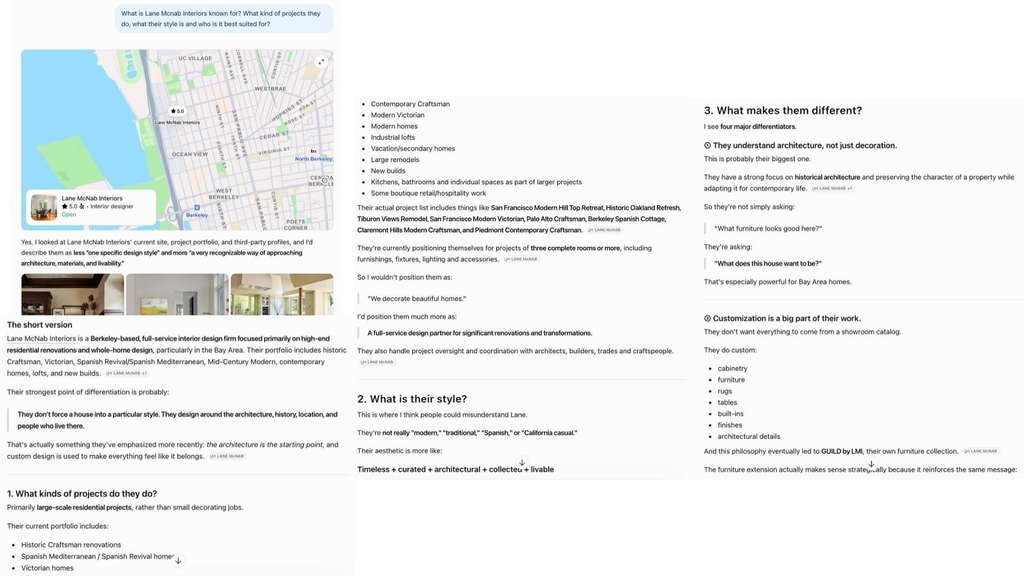
Next, look for the gaps. Maybe AI is vague about your specialty, or it’s still talking about a service you stopped offering two years ago, or it’s made an assumption about your price point. Any of those may point to something your site never says clearly or says inconsistently.
Once you know what’s missing, write it down somewhere AI can find it. Say plainly what you do, who you do it for and what makes you different. If you specialize in historic homes, say so. Give your adjectives a backbone, too. “Warm” and “timeless” are lovely, but they land so much better next to the actual materials and the problem you solved. Use thoughtful alt text where it belongs and let captions and project descriptions add the context the image can’t provide.
Finally, tell the same story everywhere. That magazine feature and that well-written Instagram caption should back up what your website already says rather than living in their own little lane. When several sources say the same specific thing about you, AI has a lot more reason to repeat it.
Find the Words for What AI Can’t See
Yes, Furniture & Home landed near the bottom of the retail categories Adobe measured. The silver lining is that most of our industry hasn’t started this work yet, which leaves plenty of room to improve here.
The next step is pretty straightforward: make sure the things you know about your work are actually written down somewhere.
So keep the photography. Keep the beautiful portfolio. Just give it language that can travel with it, and find the words for the things AI can’t see.
Curious what AI is saying about you right now? I’d love to help you find out. At Ultraviolet, we do brand and content audits through the lens of AI search visibility, so you can see where your words are working, where AI is guessing and what to tackle first. Let’s talk.